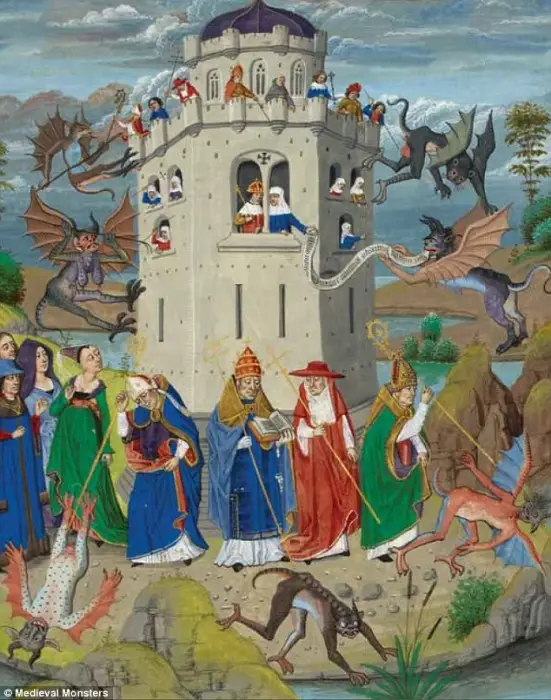
In the beginning of the old civilization, human race adorned the culture and art. Among them is the Medieval Art, which is a significant artistic field that demonstrates the ancient life, at the same time influence and enrich the modern art. In the middle ages, monsters in manuscripts and books were understood to be real. They are terrorized seas and scare missionaries.
Medieval Monsters, a new book that documents dog demons, bizarre photos of headless men, and other frightful creatures that depict religious tomes and traveling tales from middles ages, supply evidence that aliens have visited. Such creatures were feared by sailors and their possible existence sway over the minds of legendary Christopher Columbus, the historical explorers. Academics Damien Kempf and Maria Gilbert, who made Medieval Monsters, explained that during the 5th and the 15th century, people questioned the meaning of creatures outside of humanity.
Some creatures have no heads, a single eye in their ears or chest which look like arms. These unfathomable creatures may seem bizarre in their appearance as aliens, so they become a god-fearing ancestor. These specimens boasted exotic names, like the Panotii, which means “all ears.” Such books by Pliny, Mandeville, Marco Polo and Martianus were immensely filled with the medieval mind and influence. Medieval Monsters states that the book is full of freakish creatures and describes Pygmies as toothless and harmless.
Bob Lazar and Travis Walton compare their extraordinary UFO experiences, discussing mysterious craft, strange beings,… Read More
The release of a new batch of previously classified UFO files has reignited global interest… Read More
Nearly 30 years after the legendary Varginha UFO incident, a Brazilian doctor has broken his… Read More
Director Luigi Vendittelli’s investigation into Bob Lazar’s alleged work at S4 near Area 51 adds… Read More
Few alleged UFO narratives have generated as much fascination, skepticism, and debate as the story… Read More
Three glowing orbs appeared during a storm in Doha. Rare natural phenomenon or unexplained UFO… Read More
This website uses cookies.